
Zanzibar
Our first glimpse of Zanzibar was eye opening, especially given the stark contrast it presented us after having been primed by the pristine, manicured, and opulent culture of Qatar (even only through the narrow lens of our flight and layover in Doha). While navigating our e-Visa to enter the country, it became apparent that the most important factor in our application (perhaps aside from our home country) was the application fee and its contribution towards the local government. We didn’t think too much of it. But as we observed the activity and infrastructure along the streets of Kwa Mchina Mwanzo, Tunguu, and Bungi while driving across the island to our resort, it started to make sense: Zanzibar needs the financial support driven by tourism.
Villages
These areas are filled with handmade wooden scaffolding where we are familiar with commercially produced metal structures. Mini food stands store a few simple carb-heavy snacks to eat on the go, dissimilar to the vibrant produce-filled options prevalent in European and American cities. Trash is burning in the types of parks we’d normally find kids running around freely. Instead of showing skin in shorts and tank tops to alleviate the effects of 30° Celsius (90° Fahrenheit) heat, women are more conservatively covered head to toe in long skirts and head coverings, men in traditional long robes or tunics.
The Zanzibari’s homes are built modestly with thin walls and metal roofs, and residents can be found on foot alongside the busy roads commuting to their destination. Workers fix roofs, manage modest mattress shops, and craft impressive wooden doors (round inspired by Indian design, square by Arab, and including spikes to discourage elephants from knocking them down, apparently) seemingly without any urgency or concern. As if a job was just a job to earn the next meal, not a corporate ladder to climb in an attempt to achieve a third car, family holiday, or sense of superiority.
Deftly navigating the chaotic traffic and pothole-filled streets, our driver swerved in between cars, motorbikes, and buses (many without windows) to deliver us to our home for the next few days. We were stopped numerous times by tourism police to ensure our driver had the correct license to be traversing us through those particular roads. He complained to us that the same policeman gave him similar trouble the previous day (and the one before, and before…you get the point: a slightly inefficient system).
Resort

The staff at our hotel, all primarily mainlanders (from Tanzania) immediately showered us with abundant kindness, attention, and service. Greeting us with genuine smiles, offering us drink refill after refill (coffee in our case), and stopping to discuss our daily adventures, their generosity and joyfulness only grew through our stay. They made us feel completely at ease and pampered. We only hoped to be able to reciprocate the courtesy in our small ways. However, upon speaking to staff, my husband learned that given Zanzibaris’ strong Islamic association, serving alcohol and pork products to tourists serves as a source of discomfort for many.
Walking along the coast of the (Indian) Ocean to explore the shore, modest fishing boats, and other establishments (resorts, apartments, beach front bars), we couldn’t make it 10 steps without bumping into Maasai people or Tanzanians (illegally) selling a bracelet, water excursion, or motorcycle ride along the beach. Though we were never particularly interested and didn’t feel complete ease around these (predominantly) gentlemen, we couldn’t help but notice their kindness. They’d ask where we’re from, in which hotel we’re staying, if we’d been to Zanzibar (or Tanzania) previously. Of course, the ultimate goal was a sale, but they didn’t demonstrate any signs of violence or deception. They were just trying to make a living or send money to their family on the mainland.
City Center (Stone Town)
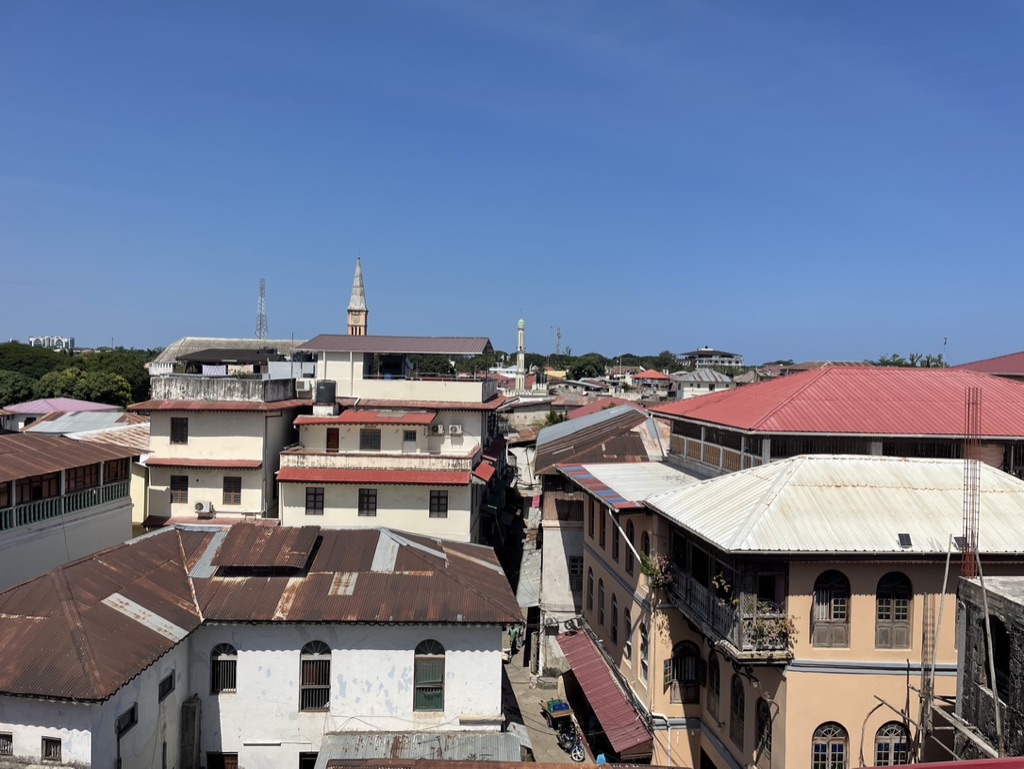
Our journey to the city center presented new lessons for us to better understand this complex culture, these welcoming people. Our tour guide described their main diet and what is common for locals to afford, including tropical fruit (red and yellow bananas, coconut, mango), spiced curries (full of cumin, coriander, and cinnamon), pilau rice, seafood (red snapper and sardines), and their Swahili/Indian flatbread, chapati. Fortunately for tourists, less so for Zanzibaris, octopus is a luxury on which we’re able to indulge, while it’s been priced out for the locals by the villas and hotels.
The streets of the Stone Town are so narrow and haphazard that only someone who’d been living there for years could understand how to navigate. While on a lunch break, school children in their matching smart uniforms (trousers and white collared shirts for the men, white hijabs and dresses, or kangas, for the women) were energetically conversing with their classmates. Adults could be found managing their homes (cleaning or prepping meals for their kids and as many friends as they could gather as possible, so our tour guide explained). Or working in one of the little shops dotting the small streets, a stand in the lively spice market, or fishing for octopuses.
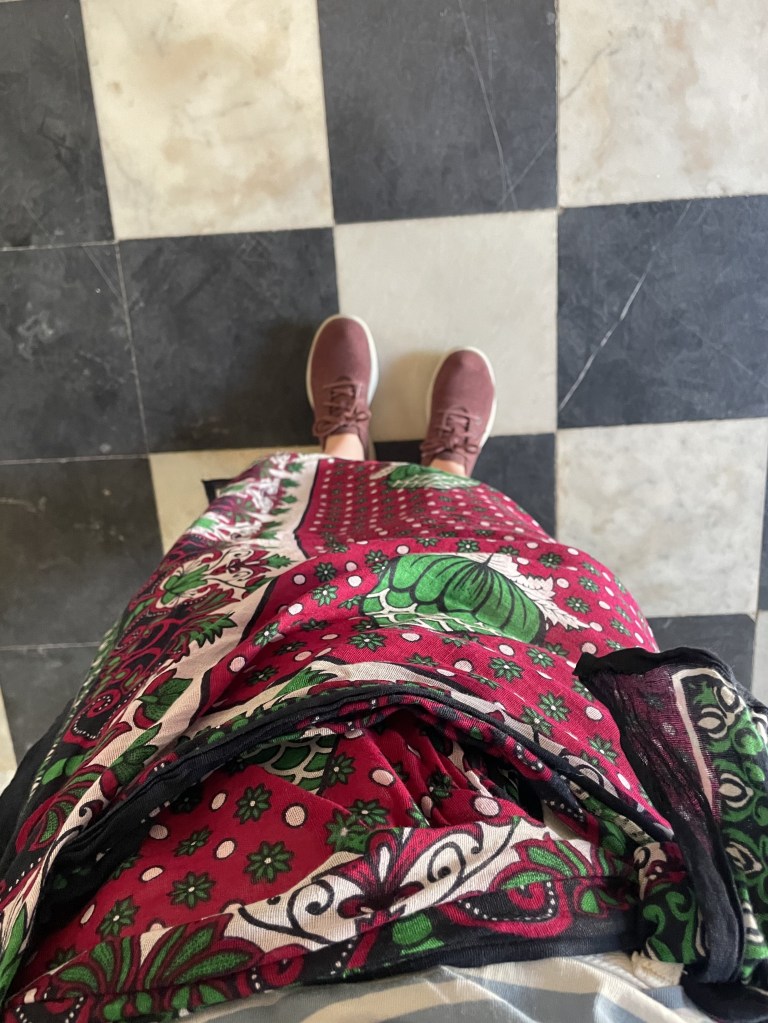
If my (very) pale white skin didn’t cause attention, my outfit may have. Though I covered up my arms in long sleeves, my shorts, perfectly acceptable by Western standards, were clearly too revealing on this predominantly Muslim island. Not only did I catch a few (understandably) unapproving stares from women, but I was also required to tie a piece of brightly patterned cloth (provided by a guard) around my waist out of respect upon entering the Anglican Cathedral, Christ Church.
Christ Church
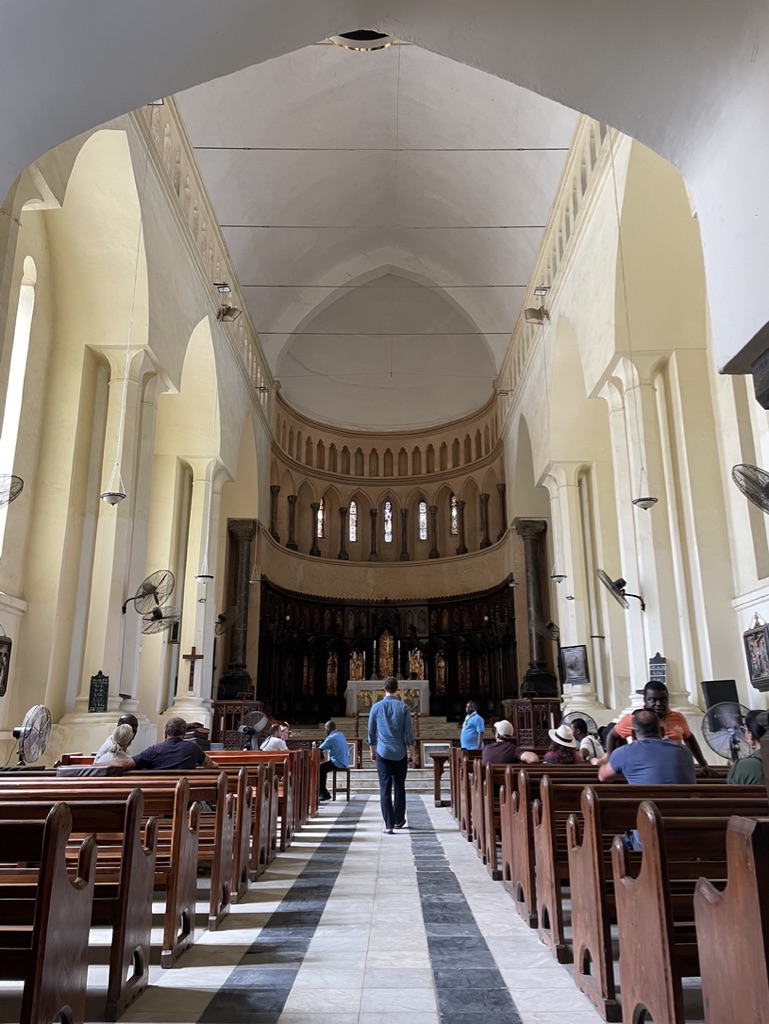
Opened in 1879, this Anglican Church is significant not only because it represents early Christian architecture in East Africa, but also due to its location on the site of what was the principal slave market on the island. Visitors may notice a cross hanging by the alter, which was made from wood of the tree above where Christian missionary and explorer of Africa, Dr. Livingstone’s heart was buried. Christ Church continues to function fully as a religious site, but it also hosts a museum dedicated to the history of the East Africa Slave Trade.
East Africa Slave Trade
I will never be able to do justice in explaining the true horror of the East Africa Slave Trade and complex history of slavery in Zanzibar with perfect accuracy. I would, however, be remiss if I failed to mention the museum and a little bit about what I learned during our visit (with the help of my history buff husband – thank you, J!).
It’s difficult to put into words just how disturbing the facts are, only amplified by knowing that we were physically standing on the grounds where abuse and deep discrimination took place for thousands of years. The exhibit isn’t huge, but it is big enough to remind visitors of the brutal history of slavery in the region. Its main focus is on the ‘later’ stages of the slave trade on the island, particularly during periods of the Omani Empire dominance (late 1690s – 1856), Zanzibari Sultanate (1856-1909), and abolition of slavery. It concludes with insight into the continuing legacy of slavery found in Zanzibari society.
During the Omani period, Arab and Indian elites on the island, as well as Swahili nobility from the mainland’s coastal regions expanded slave trade, as well as the exchange of ivory and cloves, to its peak. In fact, a shocking two-thirds of the population were slaves. The trade represented such political and economic significance to the Omani Sultanate that Stone Town become the capital of the Empire from around 1840-1856.
Slavery on the island ended in 1909, following significant military and diplomatic pressure from the British Empire. However, its legacy endured within the socio-economic framework of the island, contributing significantly to the Zanzibar Revolution of 1964 against the Sultan and Arab elites, leading to Arab minority mass-deportation and killings. Our tour guide taught us that unfortunately, discrimination still presents itself in Zanzibari culture today; to be known to have slave lineage carries serious social stigma.
Tourism
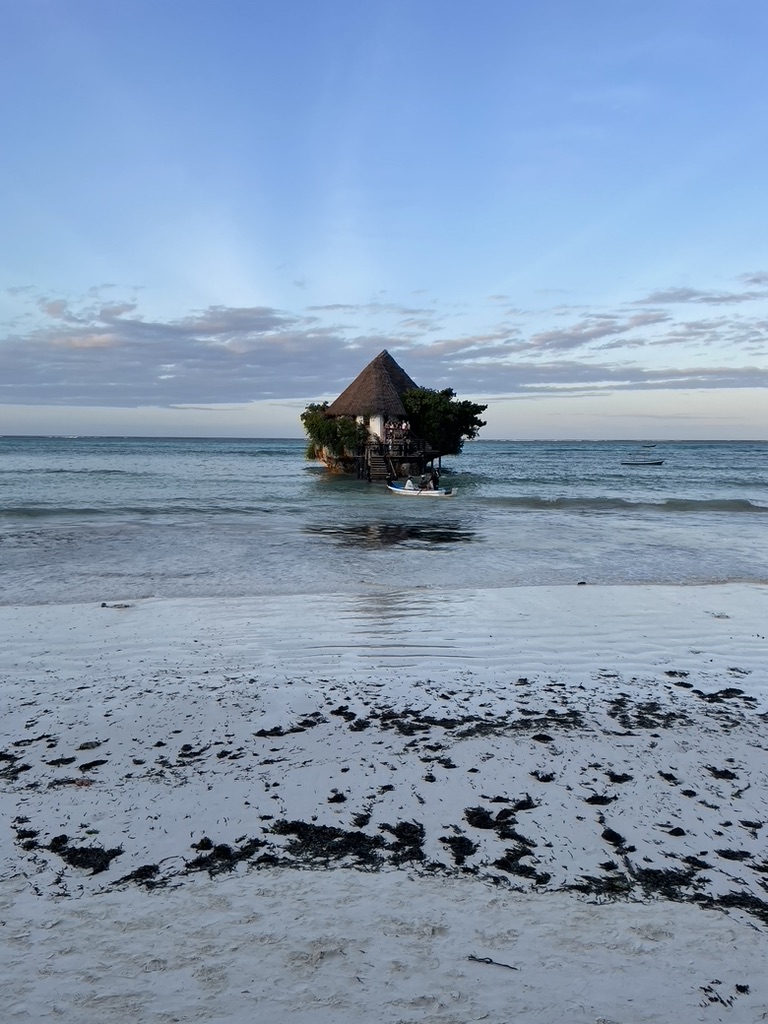
I am extremely appreciative of the hospitality of Zanzibaris and the gorgeous villa in which we were so lucky to reside. The island offers an abundance of tropical produce, delicious fish, water activities, a comfortable climate, and loving people. As a tourist, I enjoyed my time, but I don’t deny that is due to the privilege of where we were able to stay and the luxuries we could afford during our trip. I cannot push aside the truth of the island’s unfortunate poverty, petty crime, and desperate measures to gain wealth or companionship. Vacationing here was a great wake-up call to the abundance and comfort that so many of us are lucky enough to enjoy outside of this part of the world.
Please let me know if you have any questions or would like to challenge any of my points. I am open to and curious about discussing related topics, especially because I am sure my analysis lacked the eloquence or accuracy needed to represent thousands of years of East African, or more specifically Tanzanian and Zanzibarian, history.
Much love,
Bea


 HealthyBea
Leave a comment